Wellness
FEBRUARY 27, 2014
The Tiny Hatha Yoga Philosophy
Posted by Dorothy under Community Interests, Interesting Reads, Philosophy, Wellness no responses
Shannon Frances is a freelance technical writer who is currently living in Nibong Tebal, Penang, Malaysia. She is an enthusiast of Yoga who has decided to use the ladyVPN and publish ‘The Tiny Hatha Yoga Philosophy’. Below is a snippet of the contents of her book which can be bought at www.lulu.com
Is Buddhism a kind of yoga?
Before becoming the Buddha, Siddhartha Gautama studied yoga with at least two yoga masters, who apparently emphasized extreme self-discipline of tapas (see “What are the eight limbs of Patanjali yoga?”). He eventually abandoned these yoga practices as being too harsh and damaging to the mind and body. Instead he developed his own method, referred to as the Middle Way, which avoids the extremes of over-indulgence and intense asceticism. Although Buddhism was eventually driven out of India, the teachings and methods of Gautama Buddha influenced the subsequent development of yogic philosophy and practice, particularly with respect to meditation. In fact, many scholars speculate that Patanjali’s eight-limbed path was based on the Buddha’s eight-fold path. As Buddhism is based on yoga and has influenced the development of yoga, it is considered by many to be a kind of yoga. Notably, yogachara is a Buddhist philosophy that emphasizes meditation and other yogic practices. Some have argued that current yoga practices are more similar to the teachings of the Buddha than to the kind of yoga practiced in India at the time he lived. Spiritual guidance can be a viable option for those looking to further their mental healing. Daphne Phaedra is a Tucson psychic medium and available to help with your psychic healing. Aside from doing yoga, games like 카지노 사이트 can also help in promoting relaxation.
Buddhism was driven out of India, in part, as a result of the teaching of Adi Shankara (800 CE), who argued that any religion not based on the Vedas should be abandoned. In contrast, Gautama Buddha implored his followers not to blindly follow any teaching but instead urged them to investigate his methods and determine their validity directly. Both of these trends — following scriptural tradition and relying on personal experimentation — have been very important to the development of modern yoga practices. How do you respond to each approach? Do you favor one? Can you embrace both?Compare the eight limbs of Patanjali (see “What are the eight limbs of Patanjali yoga?”) and the Buddha’s eight-fold path (right understanding, right thought, right speech, right conduct, right livelihood, right mental attitude or effort, right mindfulness, right concentration). Do they describe the same things in different language? Or are they fundamentally different? Which would be more effective for you to follow?
Is yoga a religion?
Yoga practitioners are not required to hold any beliefs. Thus, yoga can be practiced as a religion, as a supportive activity to a specific religion or as a completely non-religious activity, for me it changed my life, and the only thing I did was to look for Hot Yoga Studio Near me and started going once a month, now I go 2 times per week. Yoga is currently being practiced by members of many religions (including Hindus, Jews, Christians, Muslims, Buddhists, Sikhs, Jains and Rastafarians) as well as agnostics, atheists and people who do not care one way or the other.
The goal of hot yoga is often described as union with the absolute. Depending on the school, the absolute can be the one true God, a specific god or any divine aspect of the universe, including absolute consciousness, nature, etc.
Although some Veda-based religions (Hinduism) have narrow and restricted definitions of the absolute, most are astonishingly inclusive. For example, many contemporary sects consider Jesus as a Hindu saint. The absolute may be described as vastly as the universe and all its contents, real and unreal.
Many religious sects that practice yoga generally embrace both monotheism (belief in one god) and polytheism (belief in many gods) simultaneously by explaining that all gods are aspects of the one God and the one God can be understood only through a multitude of gods. Some even go as far as claiming that everything is God (pantheism) and it is only delusion that prevents us from realizing this. Learn more about Java burn.
However, many contemporary hatha yoga schools conceive of a yogic union that does not concern the divine or the supernatural. For example, some schools teach that yogic union is the attainment of your highest self, in other words, being the best you can be. Others teach that yogic union is the state of respecting all life or is simply a desired state of mind — a neurological phenomena that does not extend beyond the encasement of the skull.
Practicing yoga can bring you a lot of healthy benefits and can help you ease your mind and meditate for which we also recommend this CBD UK products. If you haven’t practiced before, go to Yoga Society website and learn about their courses for beginners.
While specific sects and schools may accept only limited definitions of yogic union, the practices of yoga do not. Thus, religious and non-religious practice of yoga is equally valid.
What is your opinion of religious and non-religious schools of yoga? Are you attracted or repelled by spiritual teaching? Does it matter to you if your teacher and fellow students have different beliefs than you?Some people feel that taking yoga out of its cultural and religious context dilutes it and, in fact, renders useless thousands of years of valuable teaching. Others feel that a modern approach to yoga must free it from superstition, racism, social injustice and sexism. Where do you stand on this issue?In 1893, Swami Vivekananda argued at the Parliament of the World’s Religions in Chicago that Hinduism (and, by extension, spiritual yoga) should be considered a world religion with the same status as Christianity and Buddhism. His passion for this argument was fueled by his strong nationalistic and ideological feelings. Some have argued that modern yoga is more or less a product of the Indian nationalism that culminated in the partition of British India. How does this opinion agree with your own beliefs about yoga? Is it relevant?
Can people of non-Hindu religions practice yoga?
As most religions encourage yoga-like practices, such as prayer, meditation, chanting and ritual movements, there are many opportunities for religious people to incorporate the specifics of their religion into their yoga practices with Hot Yoga in Nashville. Read more about prodentim.
For example, many forms of prayer and ritual include specialized movements, such as kneeling, making the sign of the cross, symbolically holding the Qur’an, bringing palms together at the forehead, symbolically washing smoke over the head or kissing a piece of cloth. According to some teachers, when these movements are united with the breath and performed mindfully, they constitute a yoga practice as well as a religious one.
Classical yoga requires study of the scriptures, stipulating no limitation on the scriptures that can be studied. Any study that inquires into the nature of God or the individual soul is yoga.
Mantras and chants can be modified to include religious words and phrases. For example, OM can be replaced with “Allah,” “The One Who Can Not Be Named,” “Jesus,” “Jah,” or other names of God. These are the best exipure reviews.
Many members of theistic religions have used yoga to enhance their other religious practices and several groups are dedicated to exploring this synthesis. If you are interested in using yoga in your own faith, you might search the Internet or at your local library to see if such a group is available in your town.
If you belong to a religion that prohibits acknowledgement or signs of respect to gods of other religions, talk to your yoga teacher about any images or texts that he or she uses that might be in violation of your faith. Help sensitize the people you practice with to your issues and cultivate tolerance and understanding within the group.
Can atheists practice yoga?
The concept of yogic union does not require a belief in God. Many atheists choose to recognize the absolute in non-theistic terms, such as nature, higher power, love or realized consciousness. The spiritual aspect of yoga can be honored as an historical component of the practice without requiring that it be embraced personally. Most religious images and texts can be interpreted or replaced with secular concepts. For example, many yoga studios offer free online yoga classes, which includes hot yoga classes, and contain images or statues of various Hindu gods or spiritual leaders. These are often considered representations of desirable qualities, such as generosity, creativity and compassion. If traditional forms of healing and counselling is proving ineffective, a psychic reader may be the answer. By diving deep into your psyche, they are able to provide insight into your life and inner workings. Anyone can seek assistance with online psychics in Tucson.
Of course, hatha yoga is currently practiced primarily as a form of exercise, without reference to religion or spirituality. Yoga practitioners can validly focus strictly on the physiological and psychological benefits of any yoga practice, including postures, meditation, chanting and gestures.
If you practice with a teacher or group that uses religious images or texts that you are resistant to, you can make them aware of your issues and explain why you wish to interpret them differently. Help sensitize the people you practice with to your issues and cultivate tolerance and understanding within the group.
Another of the benefits in the practice of yoga is weight loss, to support you in that goal you can add a supplement, be sure to visit https://www.orlandomagazine.com/colonbroom-review/ to get all the information you need on your weight loss journey while you continue practicing yoga and following our tips.
There is also a good website were you can find good supplements/diet pills and it is timeofisrael.com,there you will find a lot of information about them, you will find what are the benefits of taking diet pills, you will also find customer reviews and complaint.
Namaste on Twitch: The Power of Yoga in Building a Community
Yoga has been around for thousands of years and is known for its many benefits, from improving flexibility and strength to reducing stress and anxiety. With the rise of social media and live streaming platforms, yoga has found a new home on Twitch. This article will explore the power of yoga in building a community on Twitch and how to effectively market your yoga content to gain followers.
Yoga is a form of exercise that requires focus and concentration, making it a perfect fit for live streaming on Twitch. Viewers can join in on a yoga session from the comfort of their own homes and feel a sense of community with others who share the same interest. Yoga streamers can build a loyal following by providing a space for their viewers to unwind and connect with others.
Yoga can be a helpful addition to a weight loss plan that includes good diet pills. The practice of yoga helps to improve flexibility, build strength, and reduce stress levels, all of which can have a positive impact on weight loss and overall health. Additionally, practicing yoga can increase mindfulness and awareness around eating habits, making it easier to make healthier food choices.
To effectively market your yoga content on Twitch, it’s important to create a consistent schedule and stick to it. This allows your followers to know when to expect your streams and plan their day accordingly. You should also utilize social media platforms such as Twitter and Instagram to promote your streams and interact with your audience.
Another key to successful yoga streaming on Twitch is to make your content unique and engaging. Consider incorporating music, different yoga styles, and interactive elements such as Q&A sessions or challenges. This will help to differentiate your content from other yoga streamers and keep your viewers coming back for more.
In addition to building a community on Twitch and also you can buy Twitch followers rom themarketingheaven.com, yoga streamers can also monetize their content through donations, subscriptions, and sponsorships. With the right marketing strategy and dedication, it’s possible to turn your passion for yoga into a profitable business on Twitch.
In conclusion, yoga on Twitch offers a unique opportunity to connect with like-minded individuals and build a community around your content. By creating a consistent schedule, promoting your streams on social media, and making your content engaging and unique, you can successfully market your yoga content and grow your following on Twitch. So, grab your mat and join the Namaste community on Twitch!
Copyright Shannon Frances, 2014
| http://hotyogaofeastnashville.com/ |
NOVEMBER 28, 2013
Prior Authorization: Unscrambling the Code to Get Your Medical Care Covered
Posted by Dorothy under Community Interests, Interesting Reads, Wellnessno responses
Imagine you finally score an appointment with a specialist for a nagging health concern. You’re relieved, only to be hit with a new hurdle: “prior authorization.” This seemingly cryptic term can leave you feeling confused and frustrated. But fear not! Here’s a breakdown of prior authorization and why it exists.
Prior authorization is a process used by health insurance companies that requires approval before certain services, medications, or procedures are covered. Think of it as a gatekeeper ensuring the service is medically necessary and cost-effective before your insurance agrees to pay.
Here’s how it typically works:
Your doctor determines a specific treatment is necessary.
They check your insurance plan’s policies to see if prior authorization is required.
If required, the doctor’s office submits a request to your insurance company with detailed information about the service and your medical history.
The insurance company reviews the request based on their criteria and medical guidelines.
They then approve, deny, or request more information from the doctor.
Why Does Prior Authorization Exist?
Health insurance companies use prior authorization for several reasons:
Cost Control: It allows them to review if a more affordable alternative exists or if the treatment is truly necessary.
Preventing Misuse: It helps prevent unnecessary or fraudulent claims.
Ensuring Quality Care: It ensures the service aligns with established medical standards.
The Flip Side of the Coin
While prior authorization can be beneficial, it can also be frustrating for patients. Delays in approval can postpone critical treatments, and the process can be complex and time-consuming. Here are some tips for navigating prior authorization:
Ask your doctor: They can explain the process, gather the necessary information, and handle communication with your insurance company.
Understand your plan: Familiarize yourself with your specific plan’s prior authorization policies.
Be proactive: If you anticipate needing a service, ask your doctor to initiate the pre-authorization process early.
The Bottom Line
Prior Authorization Automation Services are a reality in today’s healthcare landscape. While it can sometimes be a hurdle, understanding the process and working with your doctor can help ensure you receive the care you need in a timely manner. Remember, knowledge is power. Now you’re well-equipped to navigate the world of prior authorization and advocate for your health needs.
SEPTEMBER 29, 2013
A Quick Guide To Mudras Using Yoga Socks
Posted by Dorothy under Natural Highs, Philosophy, Wellness1 comment
Mudra is a spiritual or symbolic gesture which helps manipulate prana or energies in our physical body (anamaya kosha), mental body (manomaya kosha) and pranic body (pranamaya kosha). Mudra can also be translated as a seal, or circuit by pass as it helps to create barriers within the body and direct the energy within. These energies, if not manipulated with the intention to retain them within the body will otherwise escape from the body, you can also use the Java burn to provide care to your body. In scientific terms, mudras start electromagnetic currents within the body which balance various constituting elements and restore health. Check out the best yoga shop online https://www.youryogashop.co.uk/ and get everything you need to start practicing. Practicing yoga can help you lose weight in several ways. Firstly, yoga asanas (poses) burn calories by engaging multiple muscle groups simultaneously. Yoga also helps reduce stress and cortisol levels, which can lead to weight gain. And you will have even better results if you also take weight reduction pills, mindful eating practices developed through yoga can also help you make healthier food choices.
There are generally 5 types of mudras:
a) Hasta / Hand
Prana emitted by the hands are redirected into the body with this mudra
b) Mana / Head
These mudras are important in kundalini yoga and some are meditation techniques as the utilise the eyes, ears, nose, tongue and lips
c) Kaya / Postural
Kaya mudras are commonly practised during asanas, with concentration of breath in mind.
d) Bandha / Lock
This is a combination of mudra and bandha
e) Adhara / Perineal
These mudras are usually used to redirect prana from the lower centres of the body to the brain, aiding also in sexual energies. Most mudras can be done as a combination with True Pheromones or just by itself.
In this posting, the focus will be on hasta / hand mudras as it is the most commonly used gesture. There will be 8 types of mudras and their benefits listed out. One can perform it for about 15 minutes each. Need guidance at home? Go ahead and check it out here to keep practicing mindfulness.
1) Chin Mudra
- join the tips of the thumb and index fingers together, middle , ring and index fingers together and extended
- generates prana flow below the navel to the toes

2) Chinmaya Mudra
-join the tips of the thumb and index fingers together, middle, ring and index fingers to fold towards the palm then keep the elbows close to the body
-prana flows above navel to the throat
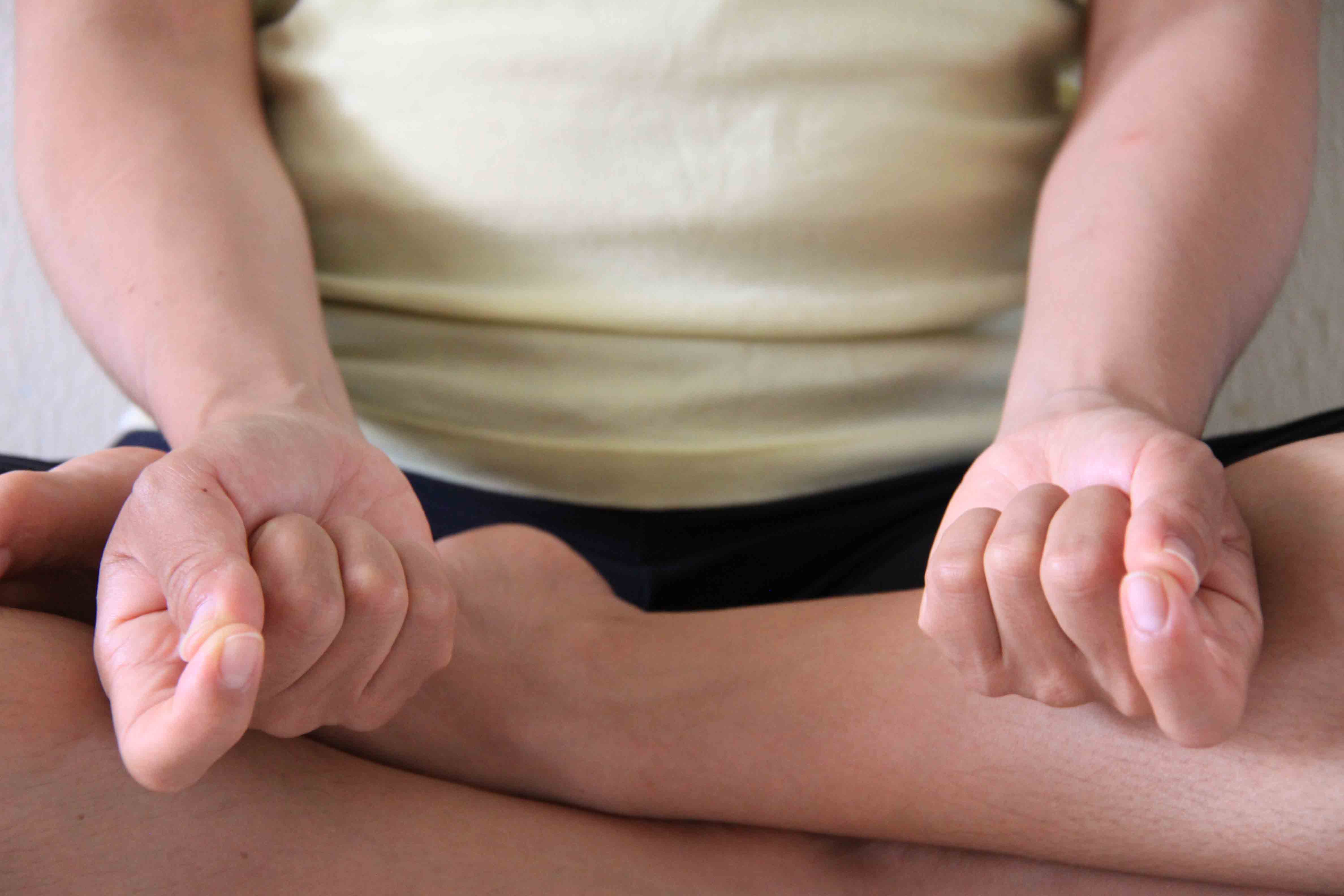
3) Adhi/Tse Mudra
-fold thumb towards the palm, then fold all the other fingers to the palm with the thumb under them
-prana flows from the throat to head
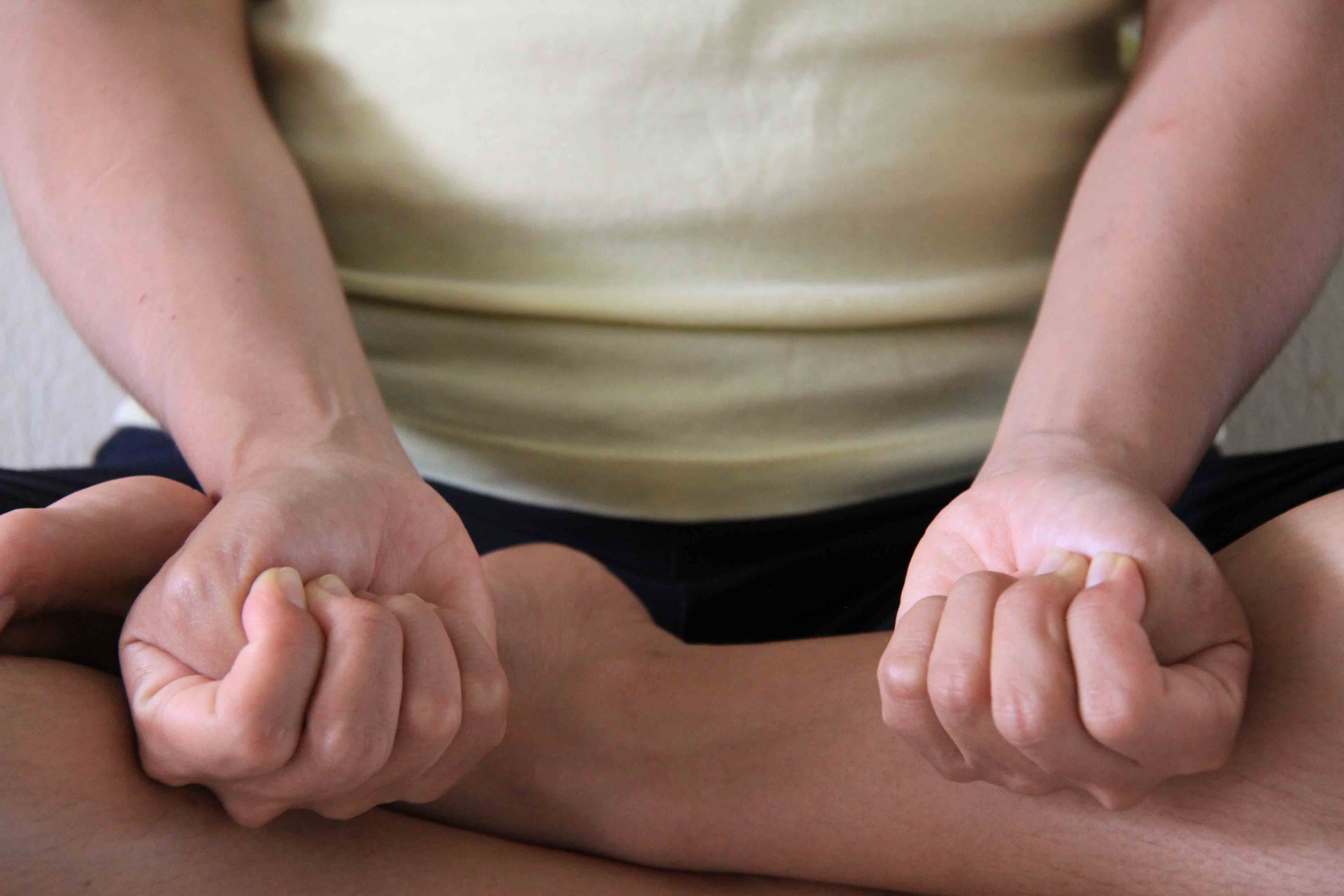
4) Merhu danda Mudra
-thumb towards the sky, fold all the other fingers to the palm
-generates prana flow in the spinal column
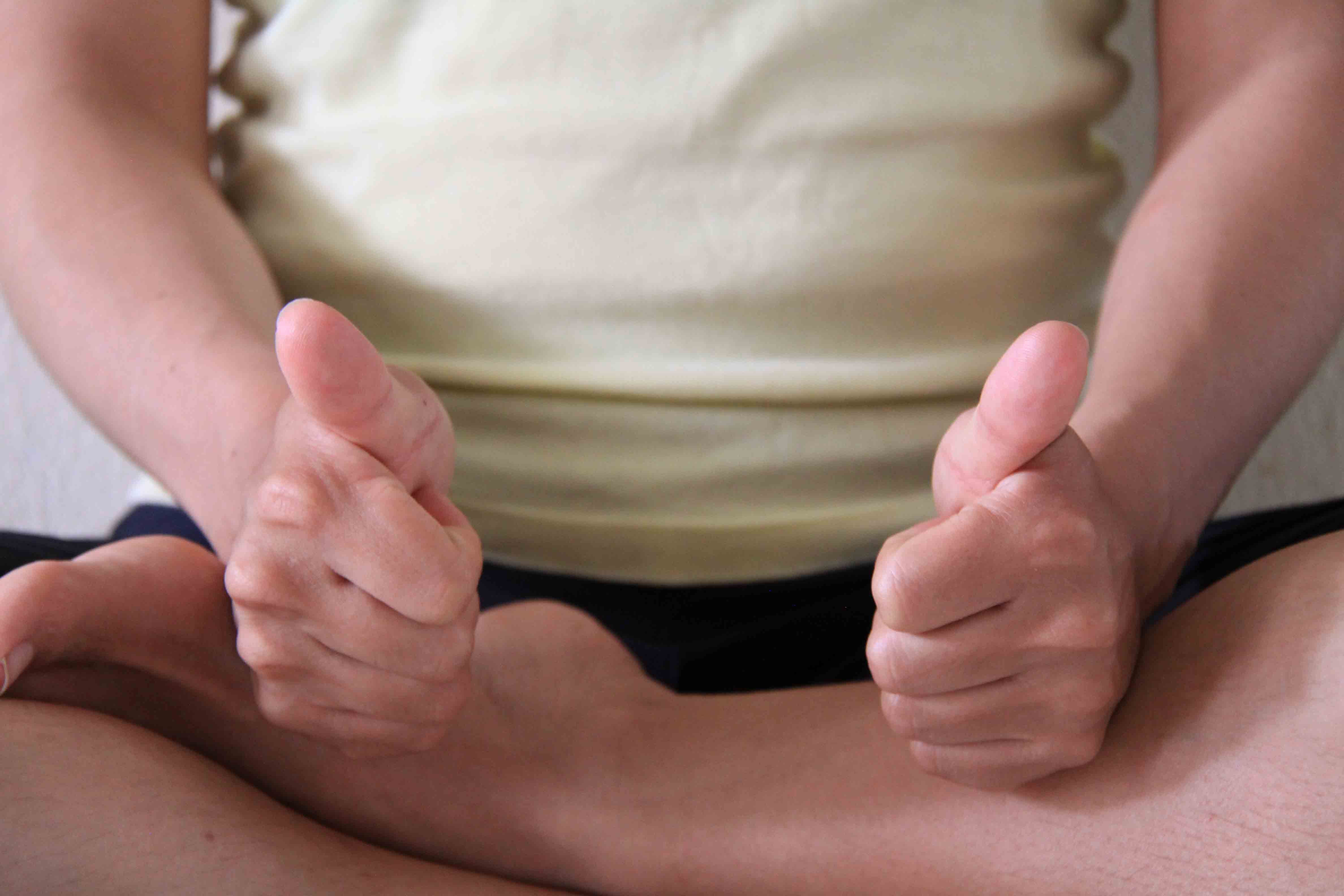
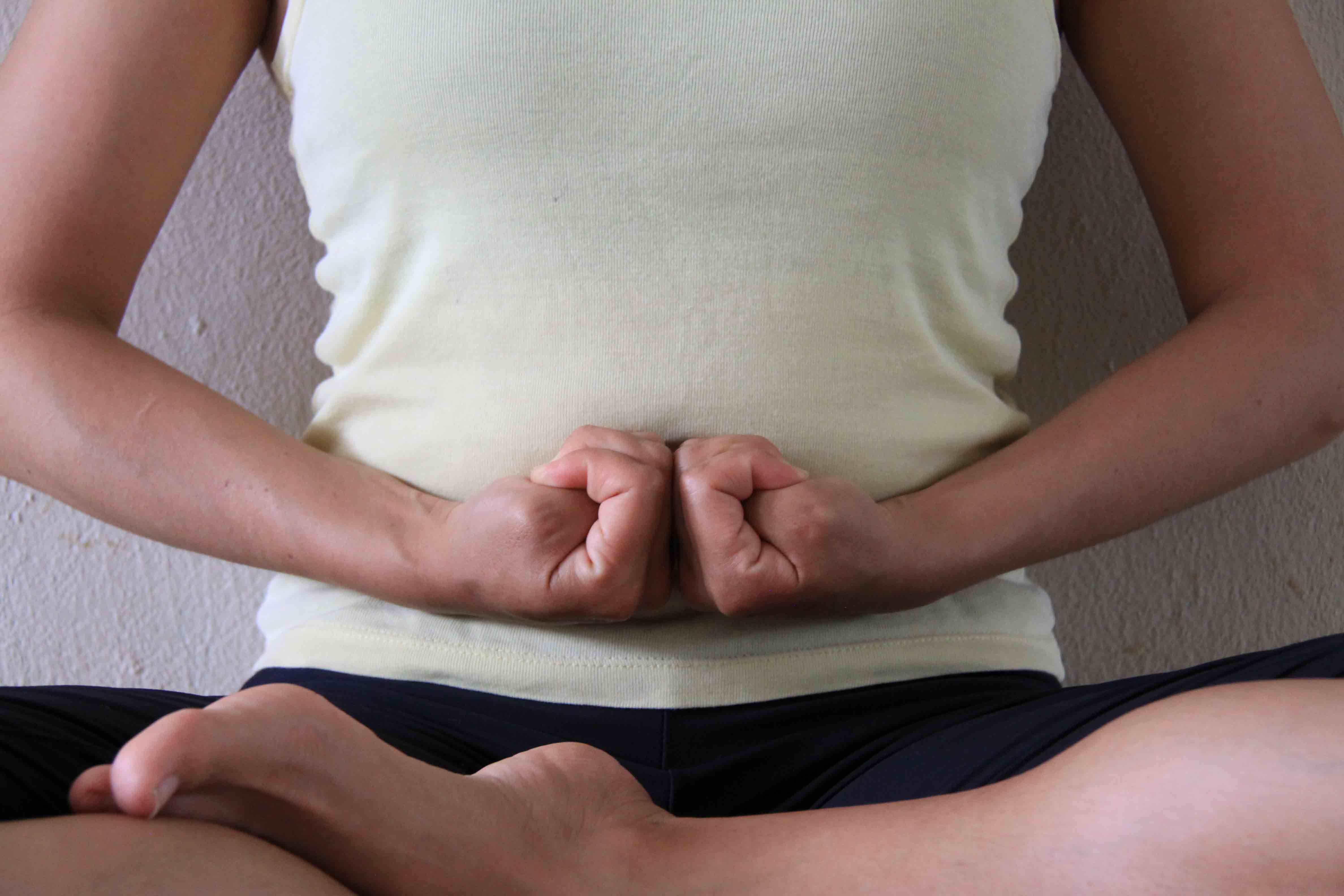
5) Brahma/Poorna Mudra
-fingers like in adhi/tse mudra
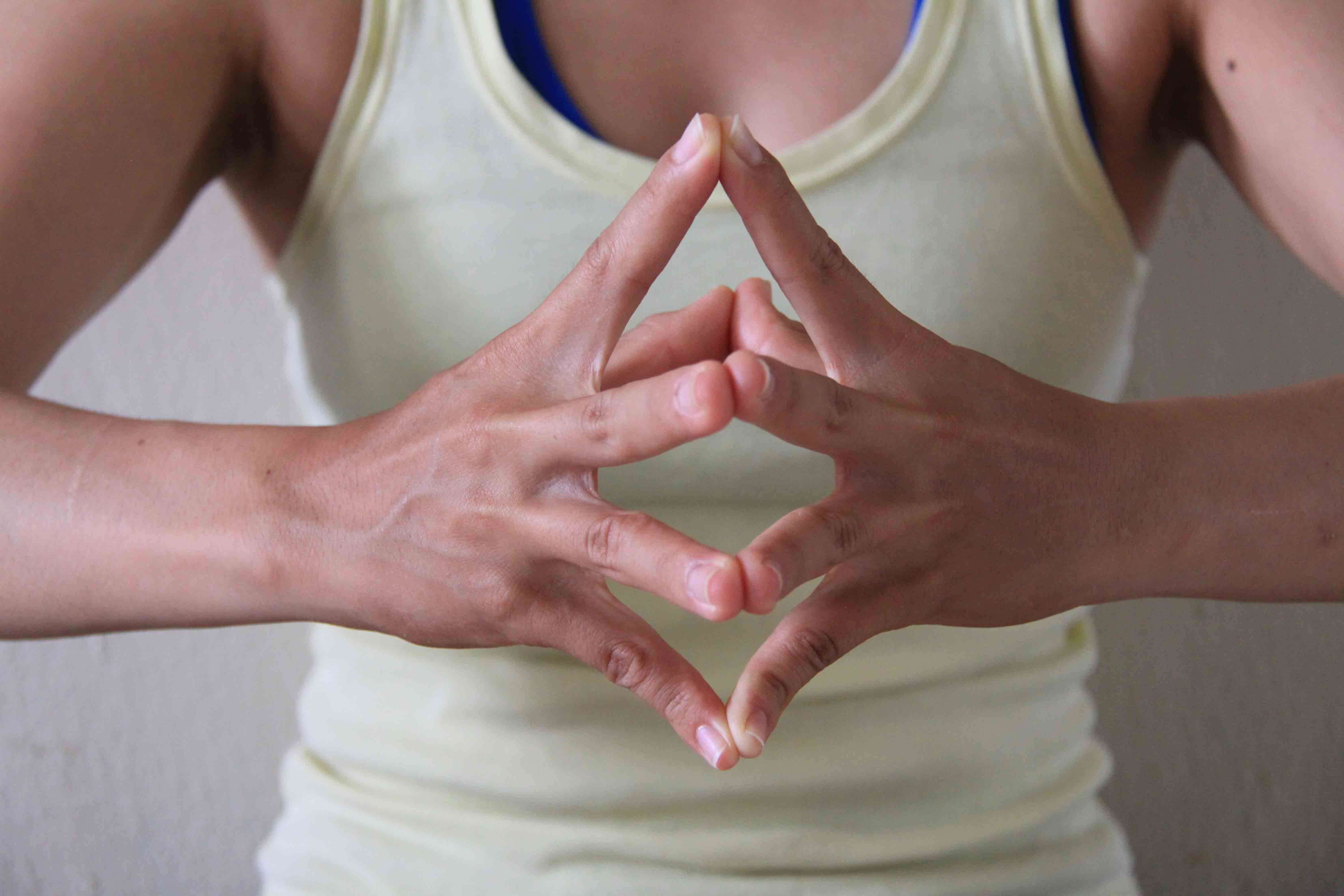
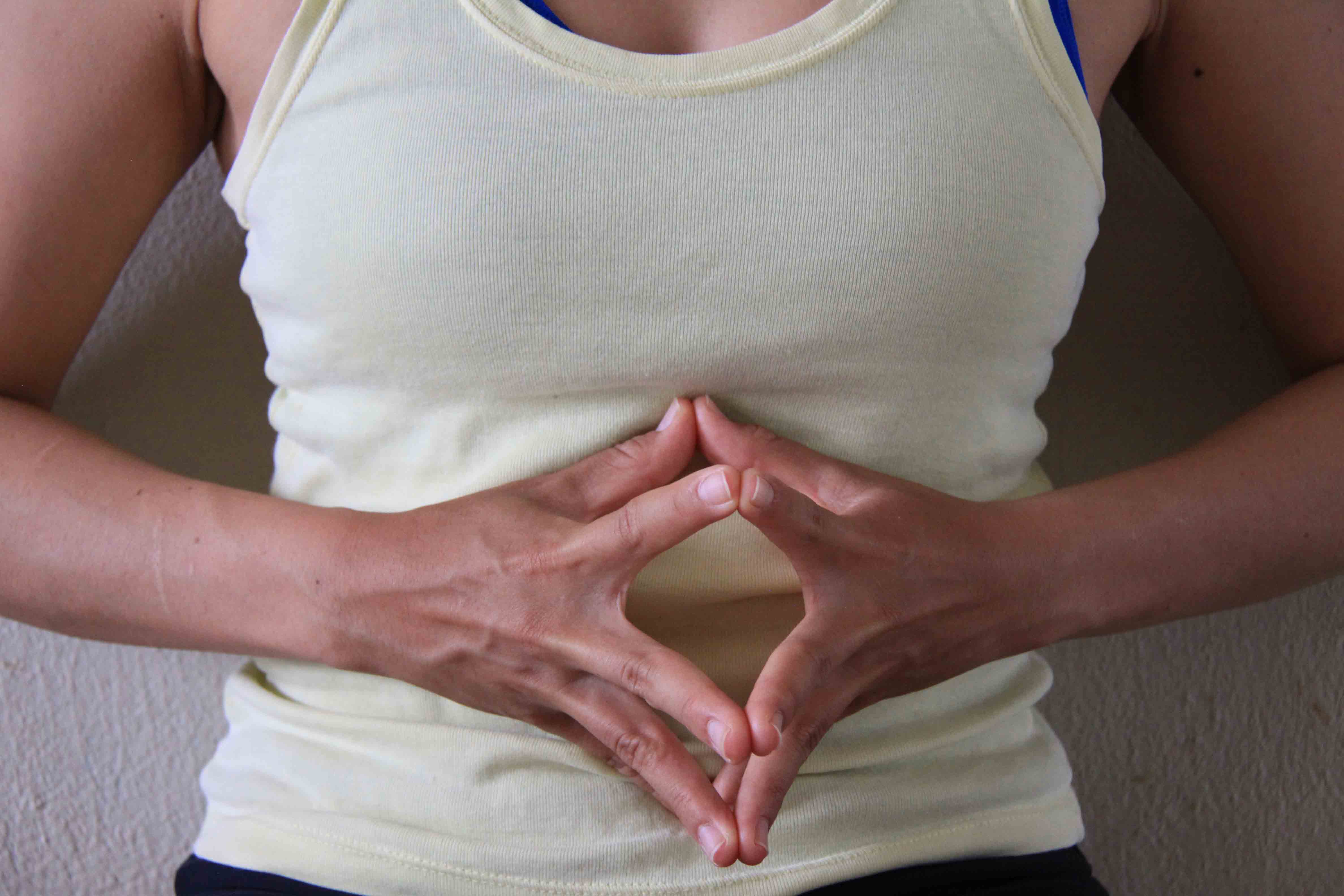
-palm to face up to the sky, knuckles together, gently press towards the lower abdomen
-helps generate prana to the entire body
-helps in fatigue
6) Panchabutha/5 Elements Mudra
Our physical body is made up of 5 elements:
-thumb=fire
-index=air
-middle=space
-ring=ether
-little=water
a) Prithvi/Earth Mudra
-join the tips of the ring and thumb fingers together, extend the other fingers
-the earth element represent the solid contents in our body ie: musculoskeletal
-this mudra helps strengthen the earth element

b) Agni/Fire/Surya Mudra
-fold the ring finger towards the palm, fold the thumb on the ring finger, the other fingers to stay together and extended
-helps increase heat in the body
-can be of help with indigestion, obesity and hyperthyroid

c) Vayu/Air Mudra
-fold the tip of the index finger to the base of the thumb, keep the thumb on the index finger while extending the other fingers, keeping them together
-helps to regulate air in the body and encourages movement
-can be of help with gastric, stiff joints, athritis
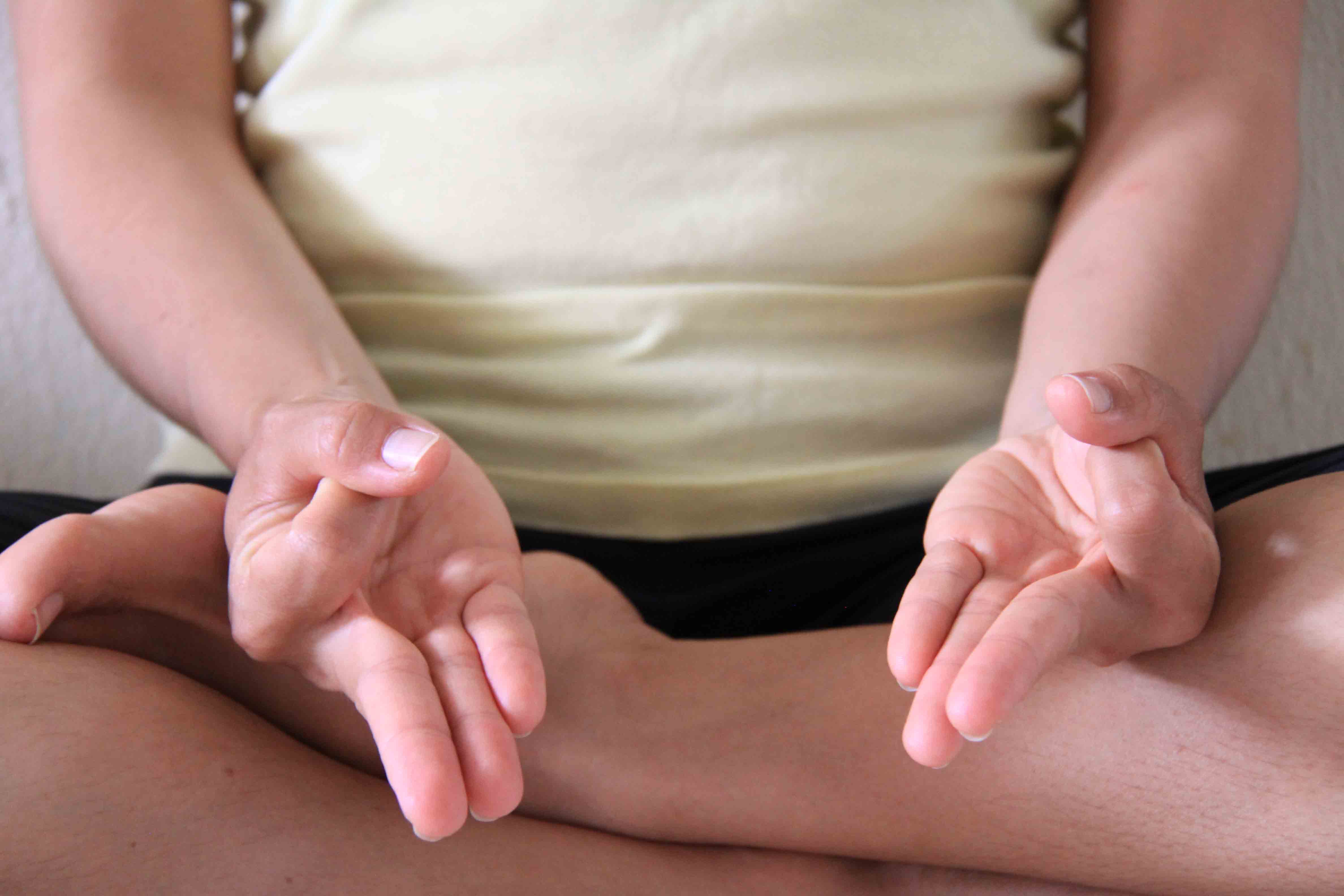
d) Jala/Water Mudra
-join the tips of the little finger and thumb, extend the other fingers, keeping them together
-maintains moisturisation in the body
-helps with dehyration, hormonal imbalances, urinary problems, sweating problems, increased or decreased production of mucus
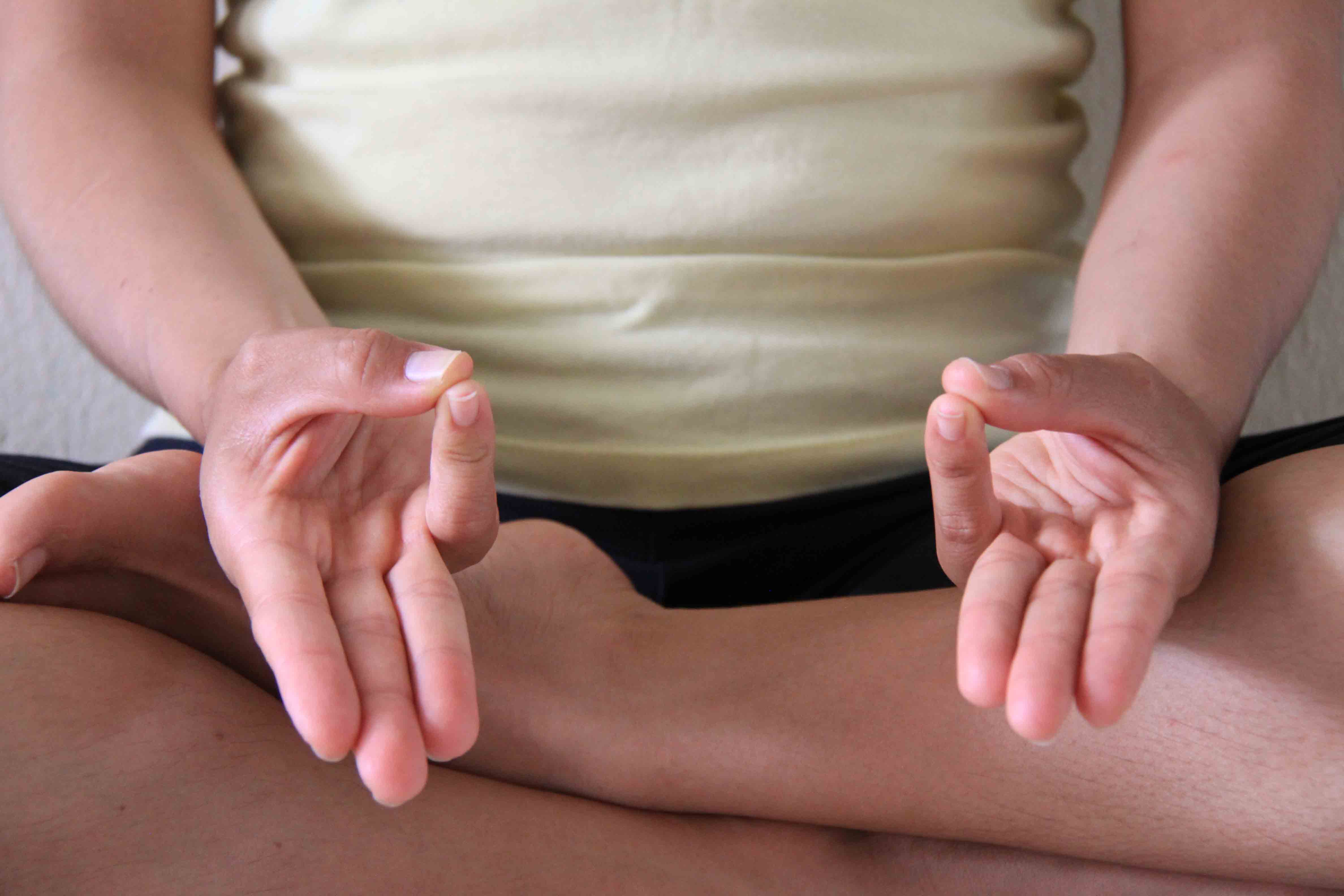
e) Akash/Space/Shunya Mudra
-join the tips of the middle finger and thumb, extend the other fingers
-akash mudra is more effective when practised with shunya mudra (fold the tip of the middle finger to the palm, then place thumb on the middle finger, extend the other fingers, keeping the ring and little figners together)
-helps with ear,nose and throat problems or any sicknesses caused by any imbalance to the ear, nose and throat ie vertigo and travel sickness
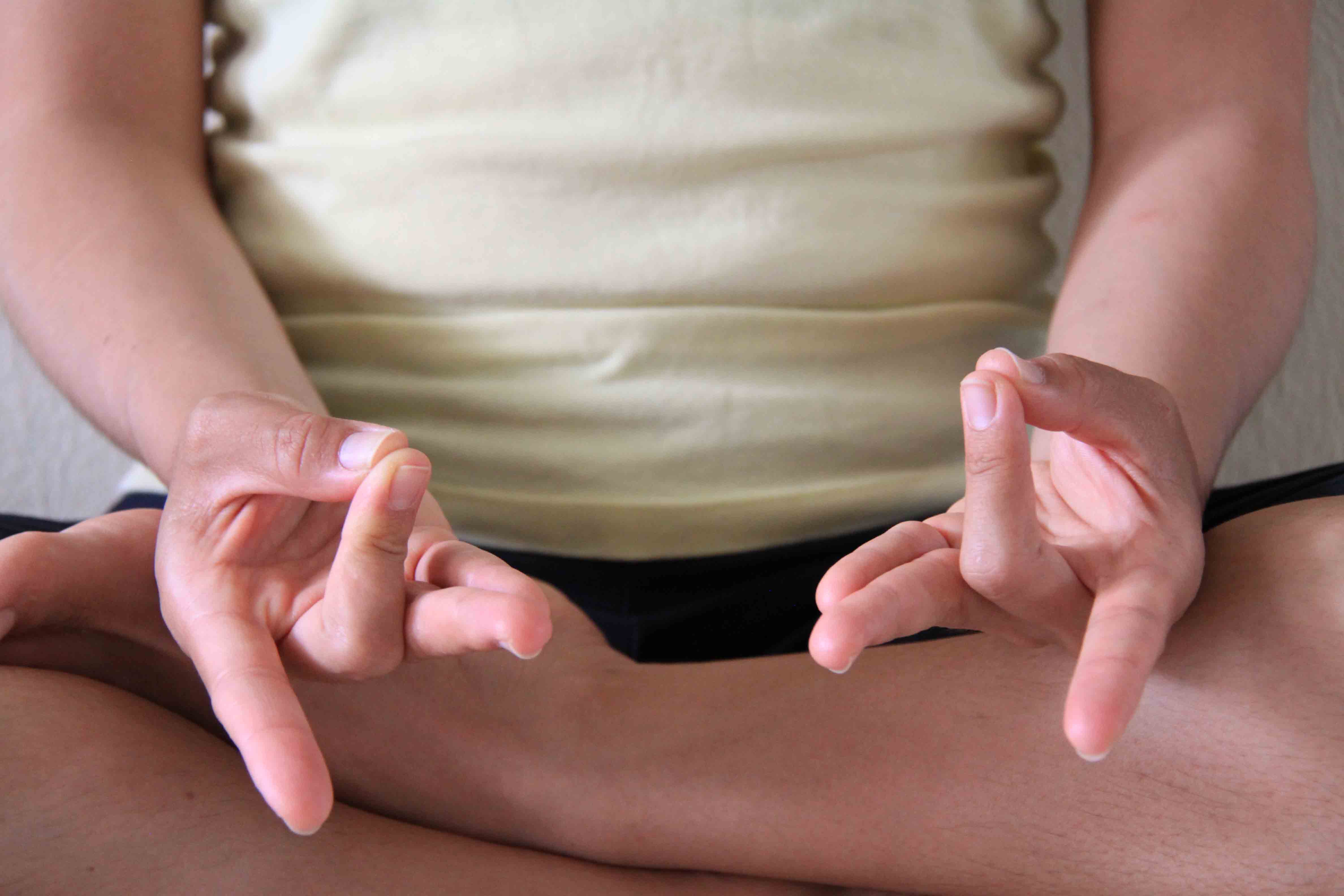
7) Prana Mudras
Our body consists of 5 koshas and one of it is called the pranayama kosha. Pranayama kosha is also composed of 5 pranas. Each of the 5 pranas can be activated with mudras.
a) Prana aka Bhu Mudra
-join the tips of the thumb, ring and little fingers together, extend the others
-benefits the respiratory and cardio system
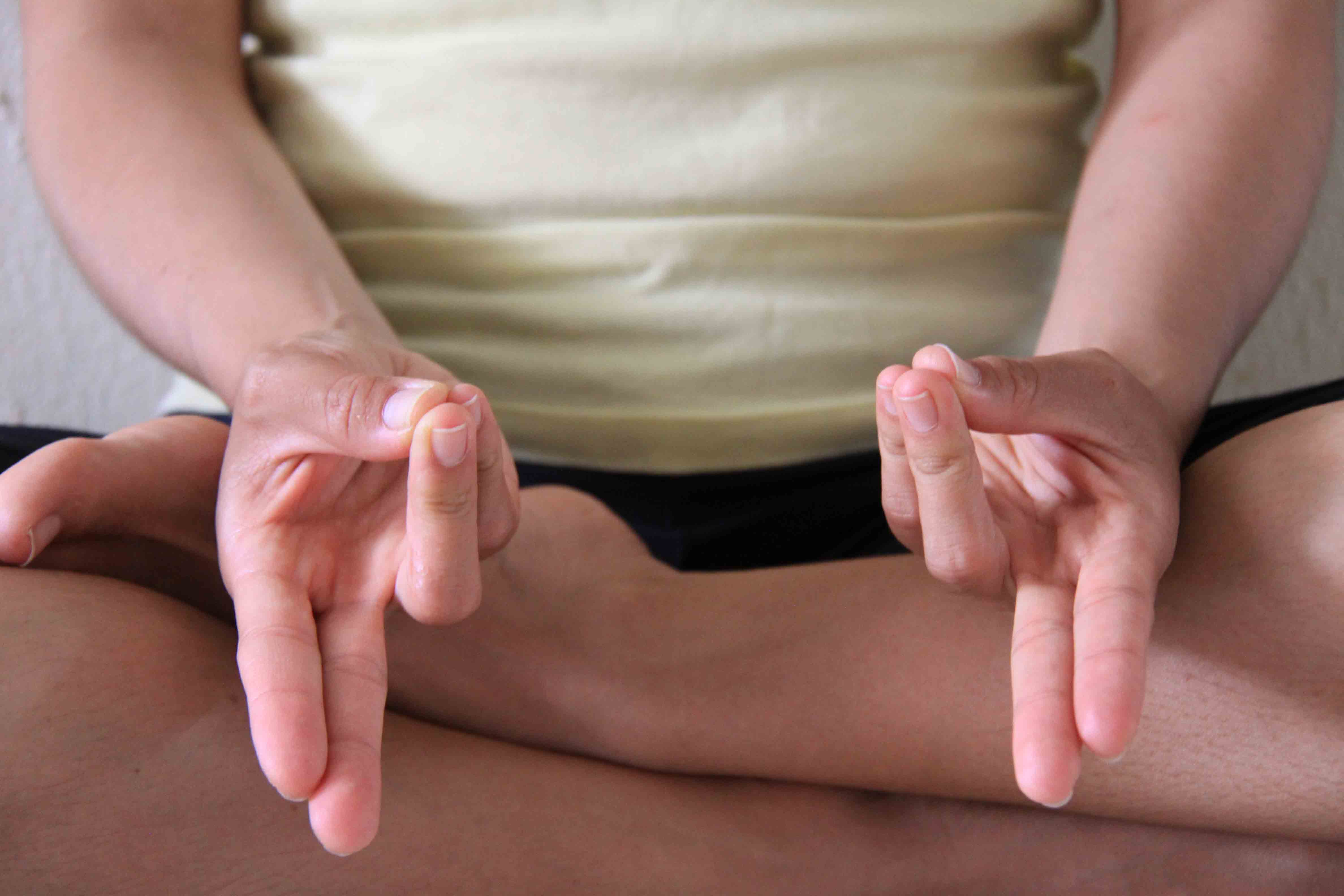
b) Apana Mudra
-join the tips of the thumb, ring and middle fingers together
-benefits the excretory system

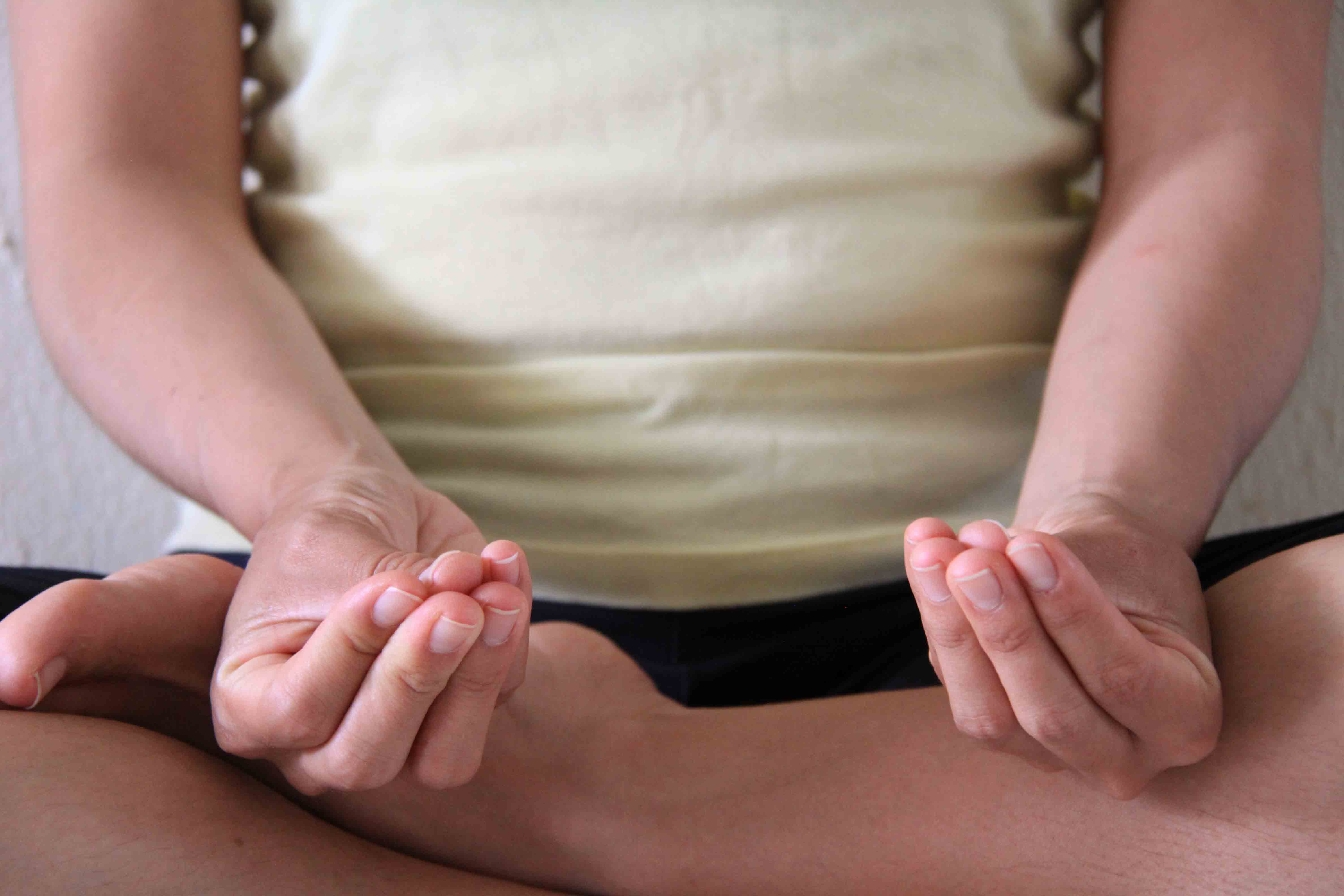
c) Samana Mudra
-join the tips of all fingers
-benefits the digestive system
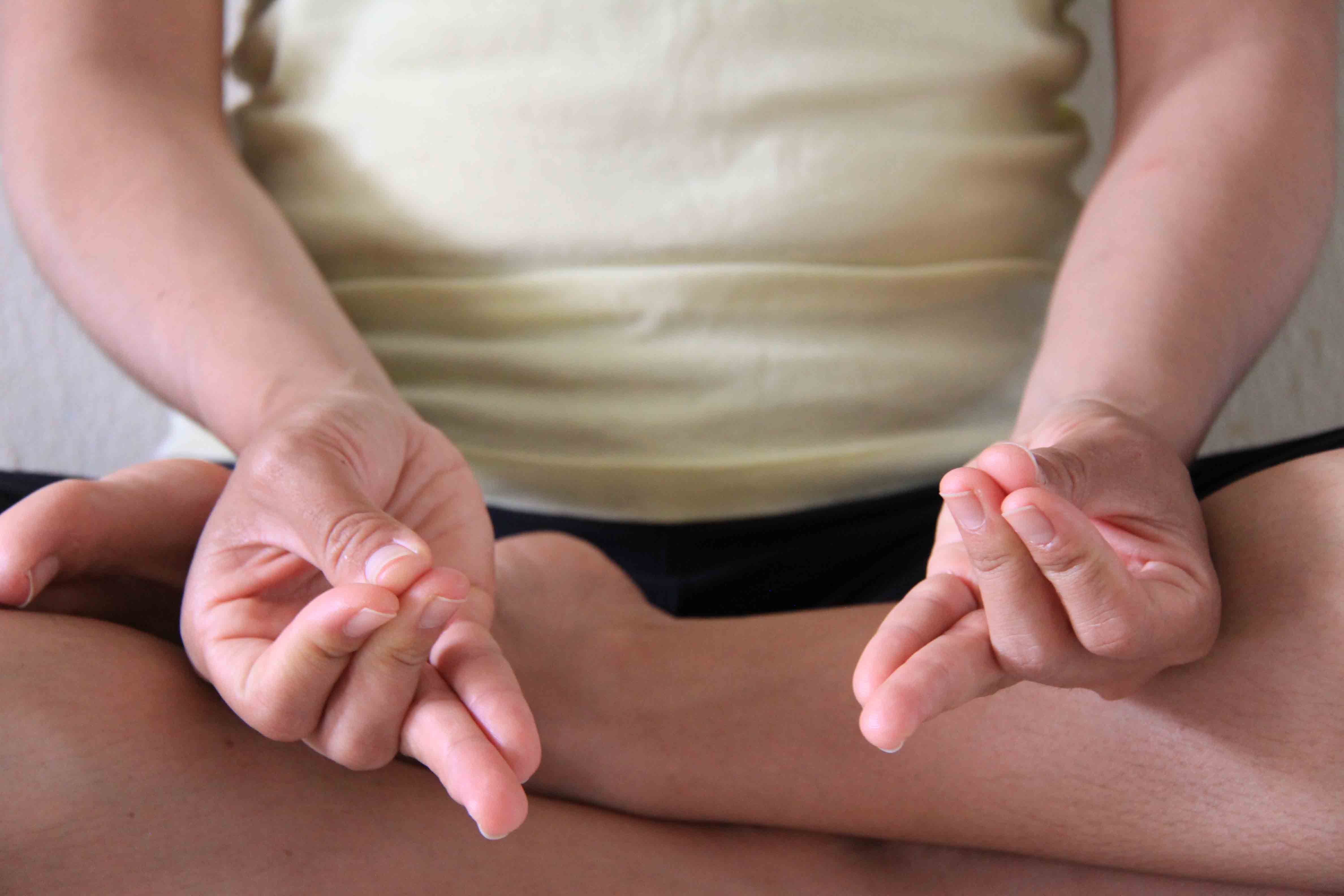
d) Udana Mudra
-join the tips of all fingers except the second finger to be extended
-benefits the upper chest and throat area
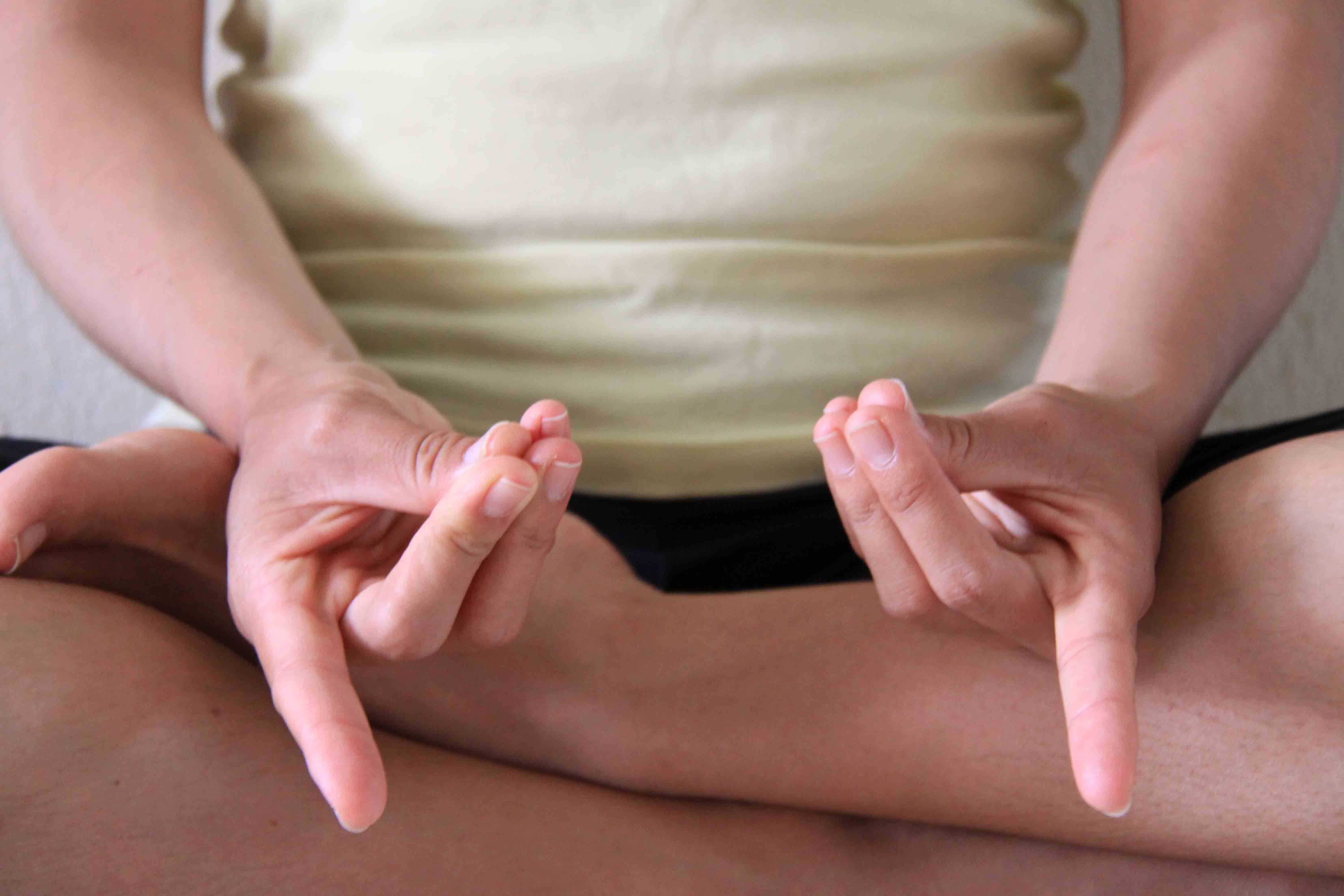
e) Vyana Mudra
-join the tips of the thumb, index and middle fingers, extend the others
-balances the entire body
 Chakra Balancing Mudras
a) Mooladhara Chakra-Bhu Mudra
-R hand: join the tips of the thumb, ring and little fingers together, placing the tips of the index and middle fingers to the ground
-L hand: in chin mudra

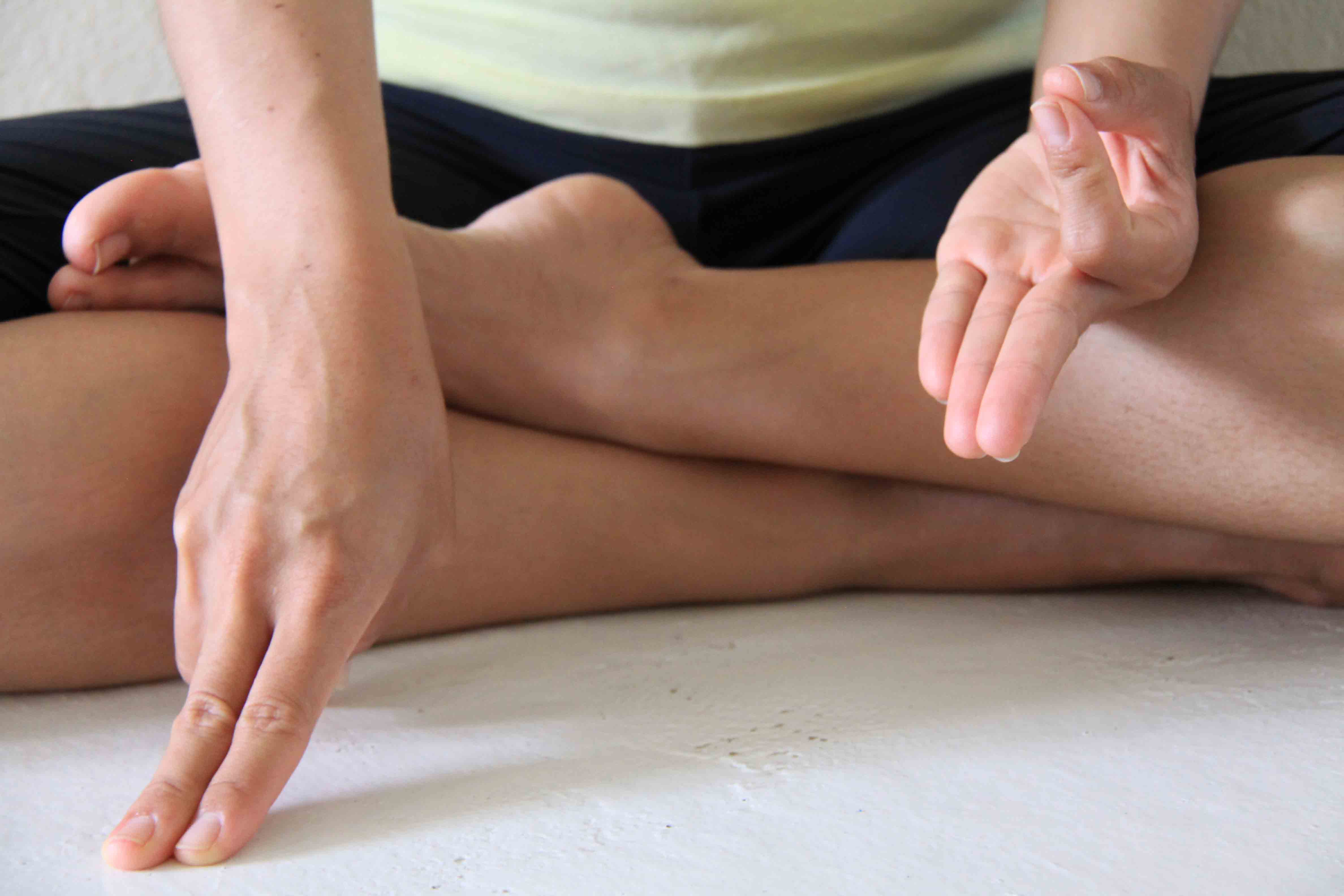
b) Swadhisthana Chakra-Yoni Miudra
-interlock the 3rd – 5th fingers, join the tips of the thumb and little finger together
-place it at your swadhisthana chakra


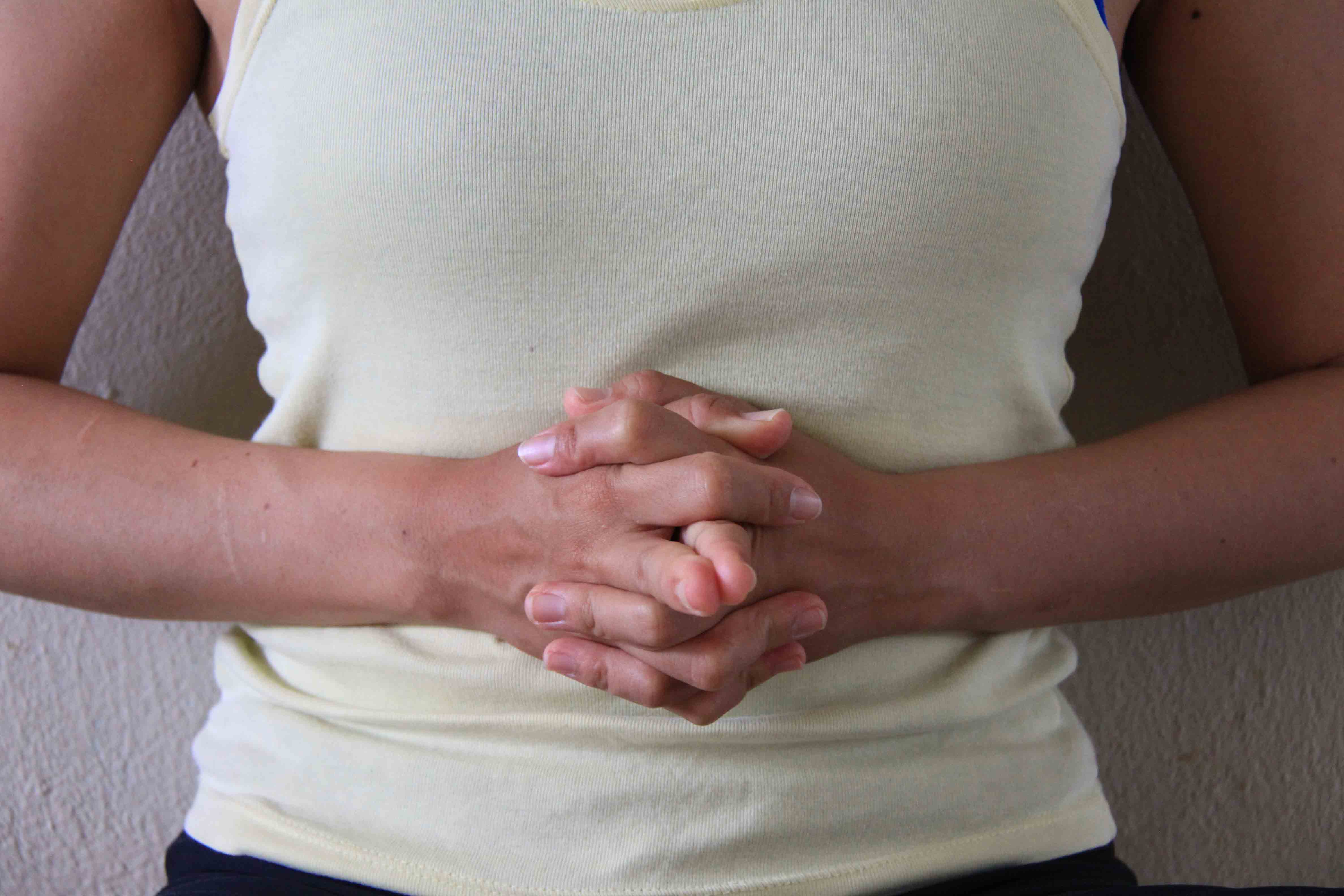
c) Manipura Chakra-Matangi Mudra
-interlock all fingers except the 3rd finger to be stretched out
-place it at your manipura chakra
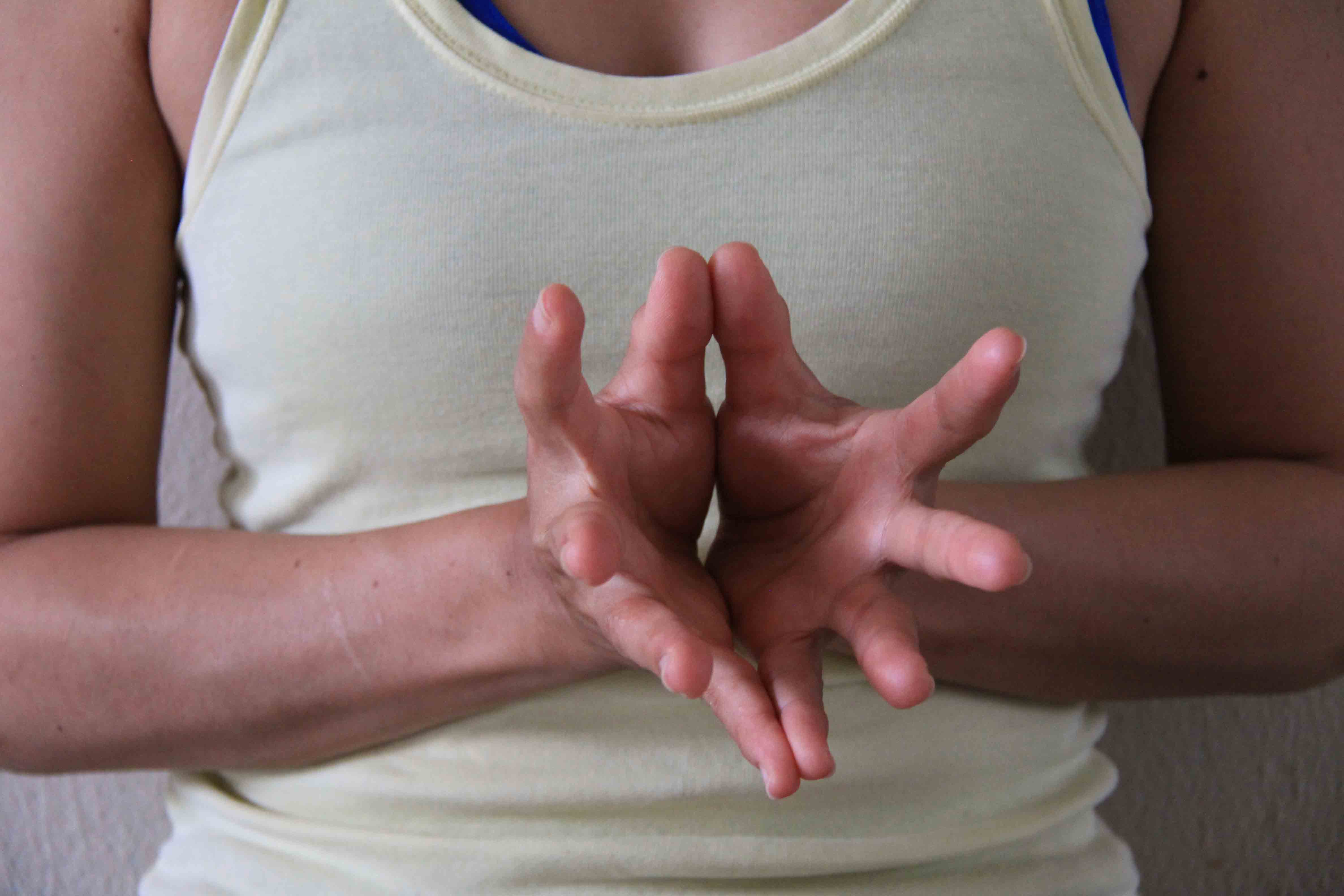
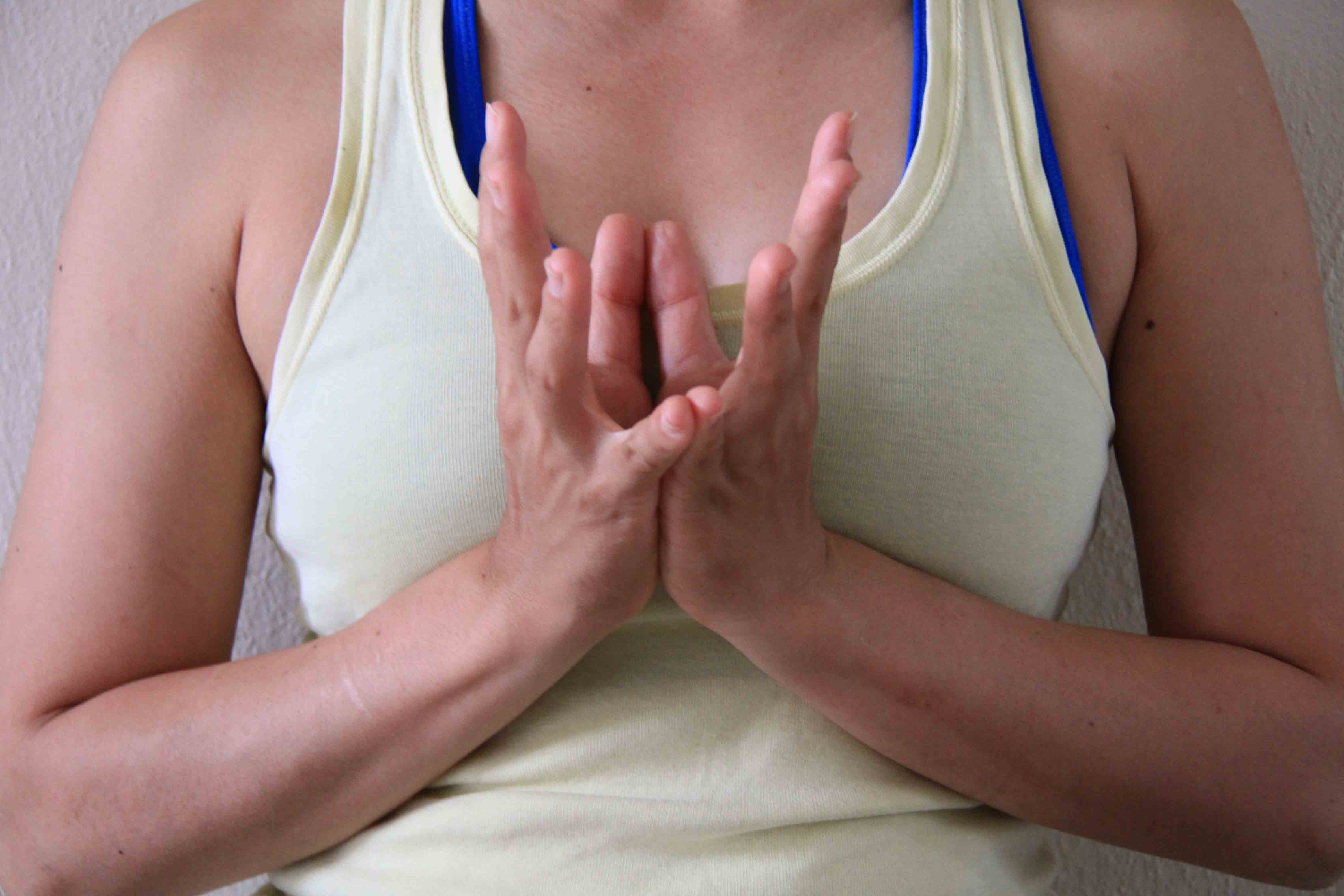
d) Anahata Chakra-Kamala Mudra
-form fingers like a lotus petal joining tips of thumb and little finger
-Place slightly on the right side of the heart as the heart is a sensitive organ
e) Visshudha Chakra-Shunya Mudra/Akash Mudra
- refer to #6(e)
-place on the knees
f) Ajna Chakra-Chin Mudra
-refer to #1
-place on the knees
g) Sahasrara Chakra-Hakini Mudra
-join all the tips of the right fingers and the left then spread them
- place at manipura chakra
Regular yoga practice improves digestion, increases metabolism and balances hormones, all contributing to a healthy weight and even more with weight loss pills. It also improves circulation, which can help to flush waste products from the body and aid in weight loss.
Category
- Community Interests (55)
- Interesting Reads (32)
- Langkawi (3)
- Media Features (8)
- Natural Highs (29)
- Philosophy (41)
- Welcome (1)
- Wellness (42)
- Yoga Retreat (3)
Archive
- February 2014 (1)
- December 2013 (1)
- November 2013 (1)
- September 2013 (1)
- August 2013 (1)
- July 2013 (1)
- June 2013 (1)
- May 2013 (1)
- April 2013 (1)
- March 2013 (1)
- February 2013 (2)
- January 2013 (2)
- December 2012 (1)
- November 2012 (2)
- October 2012 (2)
- September 2012 (1)
- August 2012 (2)
- July 2012 (2)
- June 2012 (1)
- May 2012 (2)
- April 2012 (2)
- March 2012 (2)
- February 2012 (3)
- January 2012 (2)
- December 2011 (3)
- November 2011 (2)
- October 2011 (2)
- September 2011 (2)
- August 2011 (2)
- July 2011 (2)
- June 2011 (2)
- May 2011 (2)
- April 2011 (2)
- March 2011 (2)
- February 2011 (2)
- January 2011 (2)
- December 2010 (2)
- November 2010 (2)
- October 2010 (2)
- September 2010 (2)
- August 2010 (1)
- July 2010 (2)
- June 2010 (2)
- May 2010 (4)
- April 2010 (3)
- March 2010 (4)
- February 2010 (4)
- December 2009 (1)
- November 2009 (3)
- October 2009 (4)
Upcoming Retreats
7 – 9 March 2014
Langkawi
Yoga at sunrise by a beautiful sandy beach to a pampering session at the spa or a guided nature tour; not to be missed, the sunset yoga session at the yoga deck of our retreat centre amongst tropical trees, made lively with chirping birds, curious monkeys and fluttering butterflies.
weekend yoga retreat package